Mr Musaab Yassin · Consultant Urological Surgeon & Andrologist

← The practice

Evidence Notes

Long-form appraisals of the operations I perform, written for the men considering them. Each one asks the same question — what does the evidence actually show, and how far can it be trusted?

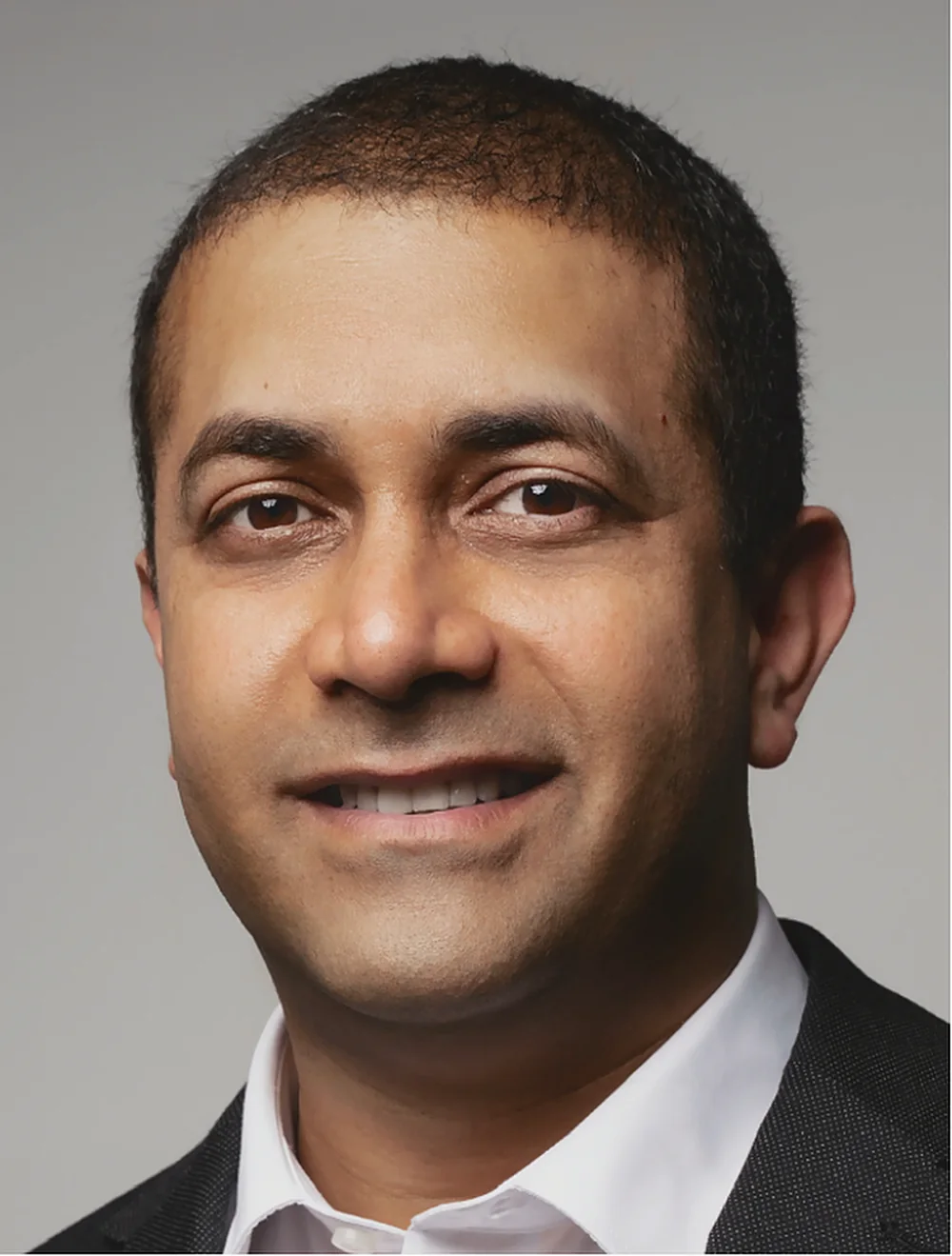
Mr Musaab Yassin, Consultant Urological Surgeon and Andrologist.

The purpose

Most men arrive having read the marketing. This is the rest of it.

Every device company publishes its best trial. Every clinic quotes the most flattering figure from it. Neither is lying, and neither is enough to choose by.

These notes take the published evidence for one treatment at a time and set out what it supports, what it does not, and where the studies disagree with one another. They quote the unflattering numbers alongside the flattering ones, because the unflattering ones are usually the reason a man later wishes he had asked something else.

They are longer than a clinic leaflet on purpose. A decision between an operation that clears the blockage completely and one that protects ejaculation is not a decision anyone should make from a bullet list. If you read one before your appointment, we can spend the consultation on your anatomy rather than on definitions.

Where a study is small, unrandomised, industry-funded or has lost half its patients to follow-up, that is stated in the body of the text rather than buried in a footnote. Where two good studies point in opposite directions — which happens more often than the marketing suggests — both are given.

Every figure is sourced

Each number links to the study it came from, with the journal and DOI. Nothing is quoted that cannot be checked.

Averages are labelled as averages

A trial mean describes a group of men. It is not a forecast for you, and these notes say so wherever a number appears.

The evidence is graded

Each note ends with a scale showing how much confidence the literature actually supports for each separate claim.

No treatment is being sold

I perform several of these operations. The notes are written to help you choose between them, including choosing one I do not do.
The shape of the decision

There is no best operation, and the reason is geometric.

This figure appears in every note in the section. It is the single most useful thing to understand before reading any of them.

Relief of obstruction most complete at the top Ejaculation kept most reliably at the top HoLEP HoLEP TURP TURP Aquablation Aquablation Rezūm Rezūm UroLift UroLift iTind iTind Ordinal, from the evidence in these notes — not a scale, and not your odds.
The whole of BPH surgery, in one picture. Rank the treatments by how completely they clear the blockage and you get one order. Rank them by how reliably they leave ejaculation alone and you get very nearly the reverse. No option sits at the top of both columns — which is why the right question is not “which is best” but “which of these two am I less willing to give up”.

The lines cross because the same property produces both results. An operation that removes the obstructing tissue removes the tissue involved in ejaculation with it. One that leaves that tissue alone leaves some of the obstruction alone too. Nothing yet invented escapes that, although Aquablation and ejaculation-preserving enucleation techniques are both attempts to.

Two things the chart deliberately does not show. It is ordinal, not proportional — the gap between HoLEP and TURP on de-obstruction is far smaller than the gap between TURP and iTind, and the picture cannot convey that. And it says nothing about durability, recovery, anaesthetic or bleeding, all of which may matter more to you than either axis. Those are in the notes.

Published notes · Surgery for an enlarged prostate

Five treatments for an enlarged prostate.

Ordered by how much tissue each one removes, from the most complete to the least. That ordering is also, almost exactly, the reverse of how well each protects ejaculation.

No. 01HoLEP18 min14 sources

HoLEP for an enlarged prostate: what does the evidence show?

The most thoroughly studied operation in this section, and the only one with durability data past ten years. It removes more obstructing tissue than anything else here, works at essentially any prostate size, and usually costs you forward ejaculation. Ejaculation-preserving modifications exist and are promising, but they do not yet carry the same evidence as the conventional operation — a distinction worth holding on to.

Read the note →
19.3→6.6Symptom score, 3,000 men
95.1%No further surgery at 10 years
~89%Ejaculation changed

The trade in three numbers.

No. 02Aquablation23 min17 sources

Aquablation for BPH: what does the science actually show?

A robotically executed waterjet planned on live ultrasound, designed to remove substantial tissue while steering around the structures involved in ejaculation. The results at five years are good and the ejaculation figures are striking. Bleeding is the honest concern, and the note explains why the widely quoted 0.2% transfusion rate should not be treated as your personal risk.

Read the note →
21.5→6.6Symptom score, 528 men
96%No further surgery at 5 years
~7%Ejaculation changed

Against 25% after TURP, in the same randomised trial.

No. 03Rezūm24 min19 sources

Rezūm for BPH: what does the science actually show?

Steam is injected into the prostate and the body clears the treated tissue over the following months. Sexual function is usually kept. The price is patience: a catheter is common, symptoms often worsen before they improve, and the de-obstruction is smaller than an operation achieves. It has the strongest five-year evidence of the tissue-sparing options, and a sham-controlled trial behind it.

Read the note →
48%Symptom improvement at 5 years
4.4%Further surgery by 5 years
30–80 mLWhere the evidence is strongest

Pivotal trial figures; real-world groups report more retreatment.

No. 04UroLift23 min22 sources

UroLift for BPH: what does the science actually show?

Implants hold the prostate lobes apart rather than removing them, so improvement arrives in days and most men avoid a catheter entirely. It has the best preserved sexual function of any procedure here — and the only published semen-analysis data showing no change. The retreatment evidence genuinely conflicts, and the note sets out why the same procedure can look best-in-class and worst-in-class depending on the comparator.

Read the note →
8.6 daysBack to normal activity
13.6%Further surgery by 5 years
NoneNew sustained sexual dysfunction

Five-year figures from the sham-controlled pivotal trial.

No. 05iTind22 min17 sources

iTind for BPH: what does the science actually show?

A nitinol device sits in the prostatic urethra for five to seven days, reshapes the outlet, and is then removed. Nothing is taken away and nothing is left behind. It has the smallest evidence base in this section, the most modest average improvement, and one finding no other note contains: a third of men in a real-world study reported high decision regret at a year, despite their scores having halved.

Read the note →
9.25Symptom points, randomised
+3.52mL/s flow, randomised
11.1%Reintervention at 4 years

Single-arm studies report roughly double these figures.

Published notes · Peyronie’s disease

Three conservative options, before anyone reaches for a scalpel.

Scar tissue in the sheath around the erectile cylinders bends the shaft during an erection. Almost every decision turns on one question first — is the disease still changing, or has it settled? These three all belong to the phase before surgery.

No. 07Perovial injections8 minSources pending

Perovial injections for Peyronie’s disease: what does the science show?

Hyaluronic acid injected into the plaque. Its distinguishing claim is that it can be used in the active phase, when the disease is still changing and most other injectables are not appropriate. Well tolerated, and superior to verapamil in a randomised comparison — but the evidence for hyaluronic acid as a class is considerably stronger than the evidence for this particular formulation.

Read the note →
82%Improved in one cohort
15°Median curve reduction
EarlyBrand-specific evidence

A prescription-only medicine. Suitability is decided at assessment.

No. 08Traction (RestoreX)8 minSources pending

Penile traction therapy: what does the science show?

Thirty to ninety minutes a day at home, with randomised controlled trials behind it. It is the only treatment in this section that reliably gives length back rather than taking it, and erectile function improves independently of the curve. The variable that decides whether it works for you is not the angle — it is whether you will use it daily for three months.

Read the note →
11.7–17°Curvature correction
1.5–2.3 cmLength regained
NoneSignificant adverse events

Randomised trials and systematic reviews.

No. 09Vacuum device7 minSources pending

Vacuum erection devices: what does the science show?

Twenty minutes a day, no injections and no incision. Modest and variable on curvature, more reliable on length, and safe at every stage of the disease. The most useful finding is not about the device alone: three months of use before corrective surgery and one month after significantly improves the surgical result.

Read the note →
5–25°Reported curve reduction
1.5 cmMedian length gain
51%Avoided surgery, 31 men

Small series. Expect stabilisation rather than a specific number.

Published notes · Male fertility

Half of all fertility problems involve the man.

Most are never properly investigated. These two cover what to do when there is no sperm in the ejaculate at all, and what a standard semen analysis cannot see.

No. 10Surgical sperm retrieval9 minSources pending

TESA and surgical sperm retrieval: what does the science show?

No sperm in the ejaculate does not mean no sperm. Where the cause is a blockage, retrieval succeeds in close to every case. Where the testis is failing, Micro-TESE finds sperm in 40 to 60 per cent — and is clearly superior to needle aspiration, on randomised evidence. Some genetic findings make surgery inadvisable, which is why the tests come before the operation.

Read the note →
~100%Retrieval, obstructive
40–60%Retrieval, non-obstructive
12 monthsTestosterone recovery

Micro-TESE over TESA in non-obstructive disease is the clearest finding in the field.

No. 11DNA fragmentation8 minSources pending

Sperm DNA fragmentation: what does the science show?

A standard semen analysis counts sperm and watches them swim. It says nothing about the genetic package inside the head — which is where recurrent miscarriage and repeatedly failed IVF cycles are often explained. The treatment most men have already bought is the one with the weakest evidence behind it.

Read the note →
−12.4%Varicocele repair, 6 months
−6.6%FSH therapy, 3 months
−3–4%Antioxidants

A 2025 meta-analysis of more than 8,000 patients.

Published notes · Urethral stricture

A narrowed urethra is a different problem entirely.

Scar tissue in the urinary passage, not an enlarged gland pressing on it. The symptoms overlap almost completely, which is why the cause has to be established before anything is treated — and a man can have both.

No. 06Optilume23 min16 sources

Optilume for urethral strictures: what does the science actually show?

A balloon coated in paclitaxel, opening the scarred segment and trying to stop it closing again. For a short recurrent bulbar stricture that has already defeated two endoscopic attempts, it clearly beats a third one. It has not been compared against urethroplasty, and it should not be described as though it had. The note also covers the precaution about semen that most discussions leave out.

Read the note →
27→75%Open at 6 months vs standard
71%No further procedure at 3 years
6 monthsContraception advised after

Randomised against repeat dilatation, not against reconstruction.

Published notes · Foreskin and phimosis

The commonest operation in urology, and the one most often done too soon.

A foreskin that will not retract is treated as a surgical problem far more readily than the evidence warrants. The strongest trial data in this area is not about the operation at all — and the distinction that decides the answer is whether the skin is merely tight or actually scarred.

No. 12Circumcision13 min10 sources

Circumcision for a tight foreskin: what does the evidence show?

Circumcision cures phimosis absolutely, because it removes the tissue that causes it. That is not the same as being the right first step. Randomised trials show that two men in three settle with a steroid cream, and a cream can be tried without closing off surgery afterwards. The note also addresses the fear that keeps men in pain for years — whether it costs sexual sensation — and the one diagnosis, lichen sclerosus, that changes the answer entirely.

Read the note →
66–87%Resolve with a steroid cream
15–35%Still come to surgery in the end
1.5–6%Complication rate after circumcision

The strongest evidence here is for the treatment that is not an operation.

Before you start

Four things that make medical evidence readable.

None of this requires a scientific background. It is the small amount of vocabulary that turns a number from an advertisement into information.

One

Ask what it was compared against

A treatment can be the best of its class and worse than the standard operation at the same time. UroLift is both, depending on the comparator. When a percentage is quoted at you, the first question is always: instead of what?

Two

Look for a sham arm

Having a procedure improves symptom scores by itself — by four points in one trial where nothing was actually done. Only a study with a sham comparison can tell you how much of the benefit came from the device.

Three

Check who dropped out

A ten-year result from a study that started with 81 men and finished with 41 is not the same as a ten-year result. The men who do well are the ones who come back.

Four

Notice the definition

“Retreatment” means another operation in one paper and restarting a tablet in the next. That single difference turns 4.4% into 23% for the same treatment.

What the grades at the end of each note mean

Every note closes with a scale rating the evidence behind each separate claim. The rating describes how confident the published literature allows anyone to be — not how likely the treatment is to work for you. A strong grade on a modest benefit is still a modest benefit, and that distinction is the whole point of grading them separately.

Strong Randomised trials and systematic reviews agree.
Reassuring Consistent, but resting partly on observational work.
Moderate Real, from smaller or less rigorous studies.
Limited Too little evidence to rely on. Said plainly.

In preparation

What the section will cover next.

The prostate notes came first because that is where the choice is hardest and the marketing loudest. The andrology and continence notes follow the same method.

Next

Prostatic artery embolisation

The one BPH treatment in these notes performed by a radiologist rather than a surgeon — which is exactly why it deserves an even-handed appraisal.

Next

Microsurgical vasectomy reversal

Why patency rate and pregnancy rate are different numbers, and why quoting the first without the second is the commonest misdirection in male fertility.

Planned

The artificial urinary sphincter

Revision rates over fifteen years, and the honest position on what a device can and cannot do for incontinence after prostate treatment.

Planned

Peyronie’s disease

Collagenase, traction, surgery and the treatments with no evidence behind them at all — a field where that last category is unusually crowded.

If a note raised a question

Reading one of these before your appointment changes what we can cover in it.

Bring the questions the note left you with. Consultations run at Nuffield Health The Manor Hospital in Oxford and The Lister Hospital in London, and I see self-funding patients directly as well as by GP referral.

WhatsApp is for appointments and practical questions. Please do not send clinical details or images through it.