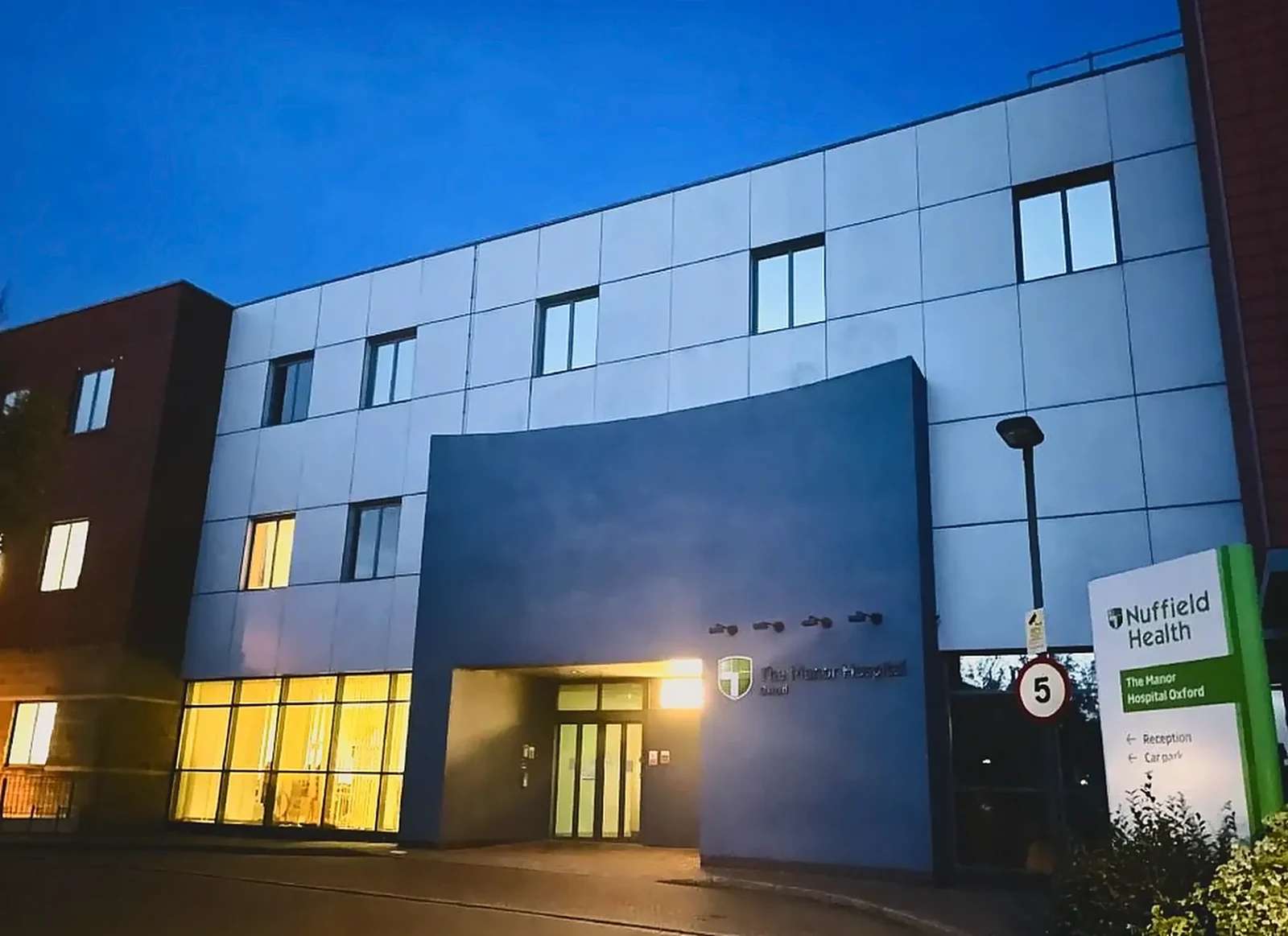
Nuffield Health The Manor Hospital, Oxford, at dusk. Nuffield Health The Manor Hospital, Oxford

Mr Musaab Yassin · Consultant Urological Surgeon & Andrologist

Oxford HoLEP Clinic

A complete guide to holmium laser enucleation of the prostate — the procedure, the hospital stay, and what the weeks afterwards actually feel like.

Nuffield Health The Manor Hospital One night in hospital Any prostate size Six weeks to full clearance

01 · Understanding HoLEP

The modern standard for an enlarged prostate, at any size.

Benign prostatic hyperplasia is very common and it is not cancer. What it does is steal sleep and shrink the radius of a life: a weak stream, waking three or four times a night, and an urgency that starts dictating where you will and will not go.

Holmium laser enucleation of the prostate — HoLEP — removes the obstructing tissue rather than carving a channel through it. It is performed entirely through the urethra with a telescope, so there are no cuts on the outside of your body, and it restores a strong, natural flow.

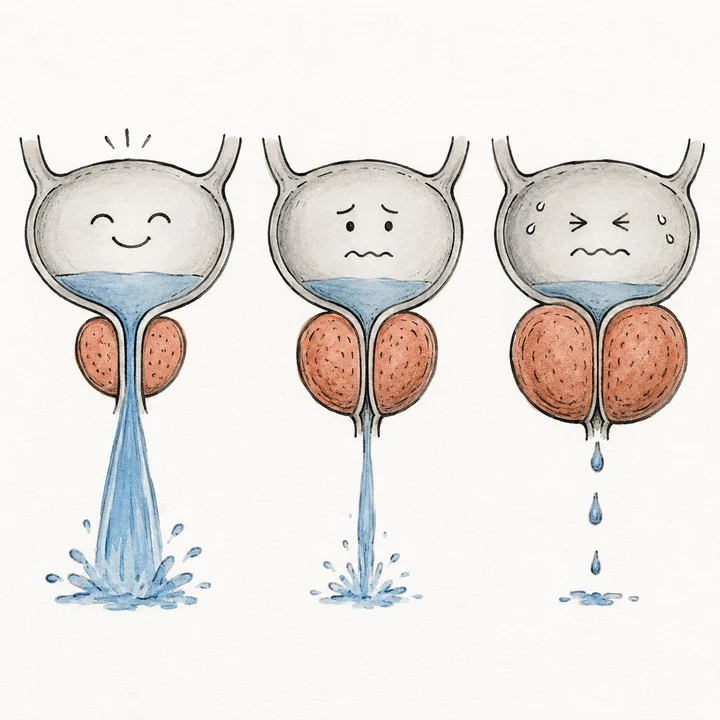
Three illustrated bladders showing progressively worse obstruction: a strong stream, a weakened stream, and only drips.
What obstruction does, in three stages. The prostate grows inward, the channel narrows, and the bladder has to work harder each time. Symptom severity tracks the direction of growth and the state of the bladder — not the overall size of the gland, which is why a large prostate can be quiet and a modest one miserable.

Why HoLEP

Any prostate size

Effective regardless of how large the gland has grown, including glands over 150 mL where minimally invasive alternatives become unreliable.

No external incision

Performed telescopically through the urethra. No cuts, no abdominal scar, no stitches.

Lower bleeding risk

The holmium laser seals blood vessels as it cuts. That makes it safer than traditional resection, and often possible without stopping essential blood-thinning medication.

It lasts

Because the whole obstructing lobe is removed back to the capsule, the chance of needing the operation again is under 1–2% over ten years.

The tissue is examined

Everything removed goes to the laboratory. In a meaningful minority of men this finds an early cancer that no blood test or scan had detected.

One night in hospital

A single overnight stay in a private en-suite room, with the catheter usually out the following morning.

An honest word about the histology

The tissue removed at HoLEP comes from the transition zone — the inner part of the gland that causes the obstruction. Most prostate cancers arise in the peripheral zone, further out, which this operation does not remove. So finding nothing on the histology is genuinely reassuring, but it is not the same as ruling prostate cancer out. Your PSA monitoring continues exactly as it would have done.

How the operation works

It is performed under a spinal anaesthetic with sedation in most cases — you are comfortable and drowsy rather than fully asleep, and the anaesthetic risk is lower than with a general. A general anaesthetic is used where a spinal is unsuitable or you would prefer one, and that is decided with the anaesthetist beforehand. The operation takes roughly 60 to 90 minutes, depending on the size of the gland.

A telescope is passed along the urethra. Using the laser, the obstructing tissue is separated from the outer capsule along a natural plane — the same way you would separate the flesh of an orange from its peel, working from the inside. Once freed, the lobes are pushed into the bladder, and an instrument called a morcellator reduces them so they can be removed and sent for analysis. A catheter is then left in place overnight to rest the bladder.

Traditional resection tissue left against the capsule it can regrow over the years Enucleation (HoLEP) channel opened to the capsule removed intact → histology plane follows the capsule under 2% need it again at 10 years
The difference is the plane, not the laser. Older operations carve a channel through the obstructing tissue and leave a rim behind. Enucleation peels the whole lobe off the capsule — which is why the result lasts, and why there is enough tissue to send to the laboratory.

02 · Your recovery

Six weeks, and none of it a surprise.

The blockage is gone the moment you wake up. The healing is not, and knowing the shape of the next six weeks is what stops a normal recovery feeling like a complication. Everyone heals at their own pace, but this is the usual course.

Day 1The procedure

Surgery, then your room

You return to a private en-suite room with a catheter draining the bladder, sometimes with a continuous irrigation system running fluid through to flush out small clots. You will be tired; that is the anaesthetic as much as the operation.

Day 2Going home

Catheter out, then discharge

The catheter is usually removed the morning after surgery. Once you have passed urine a few times and a quick ultrasound confirms the bladder is emptying properly, you go home. Occasionally the bladder needs another day, which is inconvenient rather than serious.

Weeks 1–2Early recovery

Stinging, urgency, and some blood

All three are expected. Stinging on passing urine affects most men and is worst in the first week. Urgency can be sudden and strong. Blood comes and goes. Rest, no heavy lifting, and two to three litres of water a day to keep the bladder flushed.

Weeks 3–4Resuming routine

Driving, desk work, normal life

The early symptoms settle noticeably. Most men return to driving once they could perform an emergency stop without hesitating, and to non-strenuous work and social activities. Blood may still reappear around this point as an internal scab separates — expected, not a setback.

Week 6+Full clearance

Follow-up, then everything

A follow-up consultation checks your flow and how you are emptying. From here, strenuous exercise, heavy lifting and cycling all resume. The improvement in your stream will already be obvious.

Months 2–6The bladder catches up

Urgency and night-time waking settle last

This is the part men are least often warned about. The bladder muscle spent years thickening against a blockage, and it takes months to remodel and relearn how to hold urine at low pressure. If urgency is troublesome in the meantime, it can be medicated temporarily.

03 · Preparing for your stay

One night. Pack for comfort, not for a holiday.

A small overnight bag is all you need. The list below is shaped by two practical facts: you will have a catheter overnight, and you will be walking to the bathroom the next morning.

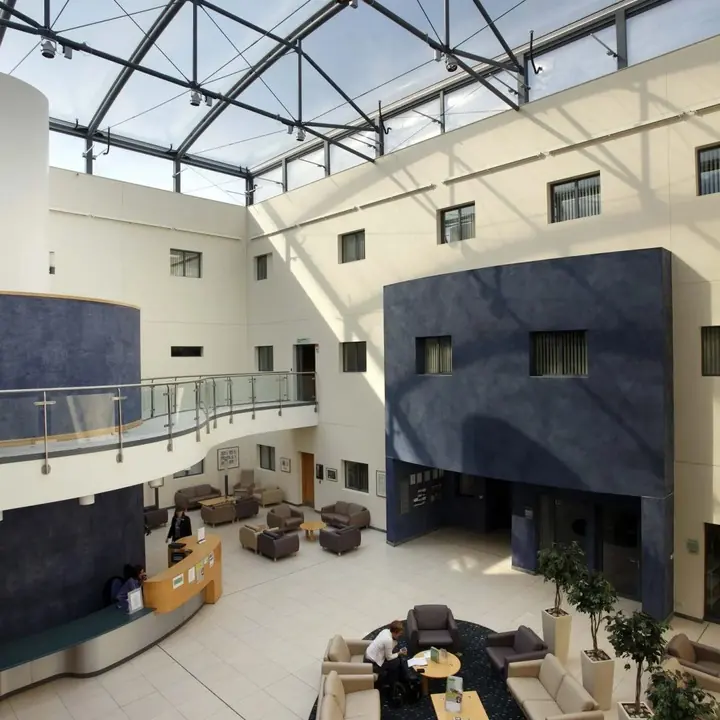
The naturally lit atrium and waiting area at the hospital.
A private en-suite room is provided. Towels, washcloths and standard toiletries are supplied, so there is no need to bring them.

Documents and medicines

  • All regular medications in their original packaging, including inhalers and eye drops
  • Your admission letter and pre-assessment paperwork
  • Insurance authorisation details, if applicable
  • Photo identification — driving licence or passport

Clothing

  • Loose trousers with an elasticated waist for the journey home — not jeans or anything with a belt across the lower abdomen
  • Supportive cotton briefs or boxer briefs; they hold an absorbent pad in place if you need one on the way home
  • A loose button-down pyjama top or nightshirt; avoid tight pyjama bottoms because of the catheter
  • A dressing gown, and slippers or slip-on shoes with a proper grip

Personal items

  • Toothbrush, toothpaste, and denture supplies if you use them
  • Deodorant, comb, and shaving things
  • Glasses, contact lenses and solution, hearing aids with spare batteries

For the waiting

  • Phone, and a charging cable longer than you think you need — the socket will not be beside the bed
  • A book, tablet or e-reader
  • Headphones

Leave at home

Large amounts of cash, jewellery, watches and anything sentimental. Wardrobe space is sized for a weekend bag rather than a suitcase.

04 · At home

Two things do most of the work: your pelvic floor, and water.

Almost everything that goes well or badly in the first six weeks comes down to how strong the pelvic floor was beforehand, how much you drink, and whether you avoid straining.

Pelvic floor exercises

Your pelvic floor is a sling of muscle supporting the bladder and bowel. After HoLEP the internal sphincter — the one your enlarged prostate had been pressing against — is opened up to allow free flow, which means the external sphincter takes over the job of holding urine in. Strengthening it before and after surgery is the single most effective thing you can do to prevent and shorten any temporary leakage.

Finding the right muscles

Imagine trying to stop yourself passing wind while also stopping the flow of urine. The sensation is a distinct squeeze and lift, upwards and inwards, behind the base of the penis. Your thighs, buttocks and stomach should stay relaxed.

One thing to do only once

You can stop your urine stream mid-flow once or twice, purely to identify the right muscles. Do not make a habit of it — done regularly it interferes with normal bladder emptying.

Get comfortable and isolate

Sitting, standing or lying down — it makes no difference. Relax the thighs, buttocks and stomach so you are working the pelvic floor and nothing else.

Squeeze slowly

Draw the muscles upwards and inwards, firmly. You should feel a clear lift rather than a general clench.

Hold for up to ten seconds

Keep breathing normally throughout — do not hold your breath. If the lift fades before ten seconds, that is completely normal; hold for as long as you can and the time will extend as the muscle strengthens.

Release, and rest for ten full seconds

Let go completely. The rest is as important as the squeeze — it is what stops the muscle fatiguing and the exercise becoming counterproductive. Repeat the cycle ten times.

Ten slow holds, each with a full rest.

Finish with ten fast flicks

Squeeze as hard and as fast as you can, then release immediately. Ten of these. This trains the muscle to respond quickly when you cough, sneeze or stand up — which is exactly when leakage happens.

Do the whole routine three to four times a day. Nobody can tell you are doing them, so a desk, a train or a queue all work.

Before surgery

  • Start three to four weeks beforehand to build a foundation. Men who arrive with a strong pelvic floor recover control markedly faster.

While the catheter is in

  • Stop. Do not do these exercises with a catheter in place — it irritates the bladder and causes painful spasms.

After the catheter comes out

  • Resume the same day, and continue daily for at least three to four months, or until you have complete leak-free control.

Fluids, and why they matter

Once the catheter is out you will see blood in your urine intermittently. Keeping the urine dilute is what stops small clots forming and blocking the urethra.

  • Aim for two to three litres a day. Roughly four to six large glasses.
  • Judge by colour. It should look like straw or weak lemonade. Dark yellow, orange or deep red means drink more.
  • Front-load the day. Spread it evenly but take most of it before six in the evening, so you are not waking repeatedly overnight.
The first few weeks — what soothes and what irritates
HelpfulLimit or avoid
Still water, as your main drinkCaffeinated tea and coffee — they stimulate the bladder
Diluted squash or cordialAlcohol — dehydrating, and it interacts with medication
Caffeine-free herbal teas such as chamomile or peppermintFizzy and carbonated drinks
Water-rich foods — cucumber, melonSpicy food, tomatoes and sharp citrus

The golden rule: do not strain

Straining on the toilet creates intense pressure in the pelvis, and that pressure can dislodge the delicate scabs healing inside the prostate cavity — which produces a sudden, alarming rush of blood. Preventing constipation is not a comfort measure here; it is the main way to avoid a bleed.

  • Fibre first. Wholemeal bread, porridge oats, bran cereals, brown rice, and plenty of vegetables.
  • Natural help. Prunes and prune juice, pears and kiwi fruit all work well.
  • Do not push. If you feel you have to strain, stop. If two days pass without a bowel movement, or the stools are hard, use an over-the-counter softener — lactulose or a mild laxative. A pharmacist will advise.
  • Eat for repair. Lean protein — chicken, fish, eggs, beans — and vitamin C from broccoli, peppers and berries support healing.

About painkillers

Paracetamol is the first choice for the stinging and pelvic ache of the first weeks, and is usually enough. Avoid ibuprofen and other anti-inflammatories while there is blood in your urine — they thin the blood and can prolong the bleeding. If paracetamol is not controlling the pain, speak to us rather than adding an anti-inflammatory yourself.

05 · When to contact the clinic

Normal healing, and the four things that are not.

Mild stinging, sudden urgency and intermittent blood in the urine are all standard parts of healing. These four are different. Contact the clinic straight away, or go to your nearest A&E outside clinic hours.

01 You cannot pass urine at all

This is an emergency. Bleeding inside the healing cavity can form clots that block the urethra completely.

  • You cannot pass urine at all
  • Severe or escalating pain and swelling low in the abdomen
  • A desperate urge to go with nothing coming out
  • Large, thick clots — bigger than a 50p coin — breaking up the flow

02 Heavy, unrelenting bleeding

Intermittent pink or red urine is expected. Heavy bleeding is not.

  • Urine that has turned thick and dark red — the consistency of tomato soup
  • Bleeding that does not begin to lighten after resting for an hour and drinking two or three large glasses of water

03 Signs of infection

The catheter and the procedure both raise the risk of a urinary infection slightly.

  • A fever, or sudden shivering and chills
  • Urine that becomes cloudy, completely opaque or foul-smelling
  • Burning that is getting steadily worse rather than slowly better

04 Severe pain

Mild pelvic aching is normal. Sharp or severe pain in the abdomen, pelvis or lower back that paracetamol does not touch should be assessed by a doctor.

Who to call

Ring the ward number you were given on discharge. That is the first call, at any hour.

It is answered by the nursing coordinator, who has medical support behind them. The team troubleshoots most problems on the telephone and escalates to the consultant in charge whenever a situation is not straightforward. If you need to be seen rather than advised, that can generally be arranged at the Manor; occasionally a problem needs a different specialty, and that is arranged through another hospital.

The practice office on 01865 307733 can be used during the day, but it is not the first port of call. Please do not use WhatsApp or email for anything urgent — they are not monitored out of hours.

If you cannot pass urine at all, or the problem is plainly more urgent than a telephone call, do not wait. Go to your nearest Accident and Emergency department and tell the staff you have recently had a HoLEP procedure.

06 · Questions men actually ask

The eleven questions, answered plainly.

Erections, ejaculation and leaking — usually asked at the very end of the consultation, and better answered at the beginning. Below them sit the questions about recovery itself: the bleeding at week three, the catheter, the burning, and how long the bladder takes to settle. Each is answered from the published evidence, with the studies named.

Will HoLEP affect my ability to get an erection?

The risk is very low. The holmium laser penetrates tissue to a depth of well under a millimetre, and the nerves responsible for erections run outside the prostate capsule — so they are not in the field of the operation at all. The published evidence shows HoLEP does not cause erectile dysfunction.

A number of men report that things improve afterwards, which is less mysterious than it sounds: the exhaustion of broken sleep and the anxiety of constant urinary symptoms are themselves considerable obstacles.

Will the surgery affect ejaculation?

Yes, and this is the trade-off worth deciding deliberately rather than discovering afterwards. Roughly 75–90% of men experience retrograde ejaculation — a dry climax. Removing the tissue that was blocking the bladder neck means semen follows the path of least resistance backwards into the bladder instead of forwards, and is passed harmlessly at the next void.

The physical sensation of orgasm is unchanged. It is permanent, it is harmless, and it matters if you are still planning to father children naturally.

If preserving forward ejaculation is a high priority for you, say so at your consultation. There are modifications to the technique intended to preserve it in carefully selected men, and whether you are a candidate is a conversation worth having before the operation rather than after.

Can the prostate grow back?

Rarely, and this is HoLEP's main advantage over older operations. Because the entire obstructing lobe is removed down to the surgical capsule rather than a channel being carved through it, the chance of symptoms returning and needing a second procedure is under 1–2% over ten years.

For the large majority of men this is a once-in-a-lifetime operation.

I take blood thinners. Can I still have it?

Usually yes, and this is one of HoLEP's real strengths. Because the laser seals vessels as it cuts, the operation can often be performed with minimal or no interruption to anticoagulant or antiplatelet medication — avoiding the bridging protocols that carry their own cardiovascular risk.

Men who stay on anticoagulation may need the catheter slightly longer and have a somewhat higher chance of minor bleeding afterwards. Bring the name and dose of everything you take to the consultation, and the reason you take it.

How long will I leak for?

Most men who leak are dry within six weeks, and nearly all of the remainder by three months.

The most granular figure comes from 589 men under one surgeon: transient stress incontinence in 8.8%, of whom 88.5% were dry within six weeks and every single case had resolved by three months. Larger series show the same arc at a larger scale — 14.5% at three months falling to 4.2% at six across 2,346 men, and 5.8% at three months falling to 1.9% at six in a 3,000-patient prospective registry.

The first day is not representative and should not be read as a forecast. Objective leakage within 24 hours of the catheter coming out has been measured at 55–58% with conventional technique. Median time to being dry is around 20 days in one prospective series and 1.6 months in a series from surgeons early in their experience, where 94.7% eventually recovered.

The UK figure worth holding onto, because it is the one nobody quotes: across 441 men at three high-volume UK centres, 12% were still using at least one pad a day at first follow-up, at three to six months. One safety pad is not the same as being pad-free, and the continence literature is clear that men do not experience it as the same thing either.

Technique shifts this more than most patients are told. A randomised trial of veil-sparing HoLEP halved one-month pad-test positivity and cut median time to being dry from eight weeks to a week and a half. Early apical release, anteroposterior dissection and anterior mucosal preservation all point the same way.

Das 2020, Int Braz J Urol, n = 589 · Houssin 2020, n = 2,346 · Lee 2024, Investig Clin Urol, n = 3,000 · Endo 2026, Int J Urol · Polledo 2026; Doersch 2024 · Masiha 2025 (DayLEP), n = 441 · Elshal 2024, Minerva Urol Nephrol, RCT · Heidenberg 2024; Shishido 2023.

Will pelvic floor exercises beforehand stop it happening?

They appear to get you dry sooner. They do not reliably prevent it, and anyone presenting them as prevention is overstating the evidence.

The one randomised trial in HoLEP specifically found incontinence at three months of 3% versus 26% when exercises were started before surgery rather than only after — a striking difference, from a single trial, in which the three-day and one-month differences were not statistically significant.

The much larger prostatectomy literature points in the same direction and no further. Two major meta-analyses found improved continence at three months — one reporting a 36% improvement, another an odds ratio of 0.61 — and no clear effect at six or twelve months. A 2025 meta-analysis reached the same conclusion. One substantial randomised trial found no shorter time to continence than simply starting after the catheter came out.

What does seem to matter, if you are going to do it: supervised training beats unsupervised; longer and more intensive programmes beat brief prehabilitation; and biofeedback or ultrasound guidance helps men find the right muscle, which is the usual point of failure. The UK day-case series drew exactly this conclusion from its own 12% figure — that it underlines starting pelvic floor exercises before the operation, not after it.

Anan 2019, BMC Urol, RCT in HoLEP · Chang 2016, Eur Urol, meta-analysis · Zhou 2023, Front Public Health · Terzoni 2025, Neurourol Urodyn · Geraerts 2013, Eur Urol, RCT · Baumann 2021; Milios 2019 · Masiha 2025 (DayLEP).

Is it true I will suddenly pass ketchup-coloured urine and fleshy debris at three or four weeks?

It happens, it is described consistently by patients, and it usually reflects surface healing rather than a haemorrhage.

The prostatic cavity does not heal like a cut on skin. Re-epithelialisation is typically incomplete within the first three months after transurethral prostate surgery, which leaves a window in which devitalised surface tissue separates and bleeding restarts. The delayed-haemorrhage literature names eschar shedding directly as a cause, alongside residual debris, infection and bladder overactivity.

An honest caveat, because it is usually skipped: the HoLEP papers themselves do not document a named “three-to-four-week scab” event. What they document is a variable hematuria course, recurrent visible blood after the catheter comes out, and bleeding that can persist beyond a month. The timing men report is consistent with the healing evidence. It is not itself a proven mechanism, and it should be described as lived experience rather than established fact.

The numbers, which differ enormously depending on what is counted:

  • 78.3% of men see visible blood after the catheter comes out. But 47.8% expect it gone within a week and 93.5% within thirty days — which is precisely why day 23 causes panic.
  • Counted narrowly, as transfusion or return to theatre: hematuria or clot retention 2.6%, cystoscopy to evacuate clot 0.7%, across 10,371 procedures. Transfusion 0.6% and secondary coagulation 0.5% in a 3,000-man registry.
  • Counted broadly — prolonged irrigation, extended catheterisation, calls to the practice, visible blood past a month — 17.7%. Roughly one man in six has a recovery meaningfully altered by bleeding.
  • In the UK series: bleeding needing review 6.8%, return to theatre 0.9%.

Higher risk if you take anticoagulants or antiplatelets — the strongest single predictor, at an odds ratio of 2.34, and 4.9 for early haemorrhagic complications in one high-volume centre. Known prostate cancer roughly doubles it; cancer together with antithrombotics produced a 29.4% bleeding rate against 8.1% with neither.

What defines a problem rather than an unpleasant week is not the colour. It is being unable to pass urine, clots blocking the bladder, needing irrigation again, readmission or transfusion. Those are the thresholds the studies use, and they are the ones that need acting on rather than watching.

What to do

Ring the ward number you were given on discharge — that is the first call, at any hour, and the nursing coordinator who answers it has medical support behind them. If you cannot pass urine at all, or the problem is plainly more urgent than a telephone call, go straight to A&E. The full pathway, and the four warning signs that need acting on, are set out in When to contact the clinic.

Teng 2021; Huang 2014 (eschar shedding and delayed haemorrhage) · Shah 2023 (coagulation depth) · Assmus 2021, CUAJ, patient expectations · Porreca 2021, 10,371 procedures · Lee 2024, n = 3,000 · Hines 2023, broad definition of clinically significant hematuria · Masiha 2025 (DayLEP) · Pastore 2024 · Porreca 2025 · Gunturi 2025.
How bad is the burning, and the bladder spasms?

Common in the first fortnight, largely settled by a month, and not the same thing as an infection — though it is worth having that excluded.

Dysuria persisting as a recorded complication ran at 7.5% across 10,371 procedures, and frequency or dysuria at 5.6% in a 1,016-case series. In the first month it is much commoner than that: a 2026 comparison found dysuria at one month in 32.3% of men operated with standard laser settings, falling to 15.6% with a lower-trauma setting, with the difference gone by three months in both groups. HoLEP produces more dysuria than TURP, which is one of the few places the comparison runs against it.

Bladder spasm and catheter-related discomfort are common enough that there is a randomised trial of preventing them: 110 men given a pudendal nerve block at the time of surgery had significantly less spasm, less discomfort, less pain and needed fewer painkillers in the first 24 hours. That tells you two things — that it is a real and expected part of the early recovery, and that it is treatable rather than something to be endured.

On painkillers: paracetamol is the sensible first line in the first few weeks. Anti-inflammatories such as ibuprofen add bleeding risk at exactly the point when the prostatic cavity is still healing, so anything beyond paracetamol is worth a conversation rather than a trip to the pharmacy.

Porreca 2021, 10,371 procedures · Whiting 2021, 1,016 cases · Virtual Basket comparison 2026, Can J Urol, n = 168 · pudendal nerve block RCT 2022, Clin Interv Aging, n = 110 · HoLEP vs TURP in men ≥ 75, 2024.

How long is the catheter in, and can I really go home the same day?

Usually overnight or less — and same-day discharge is realistic for about half of UK patients and most patients at high-volume centres.

Median catheterisation in a 3,000-patient registry was 1.0 days. Same-day catheter removal succeeded in 85.5–90% of selected patients across a systematic review, and same-day discharge in 87–87.4% at high-volume centres without any increase in complications.

The UK number is more sober and more useful. Across 441 patients at three high-volume UK centres between 2020 and 2024, mean stay was 0.6 days and 51% were true day cases — with a mean prostate volume of 111 cc and one man in five anticoagulated. Discharge within 24 hours did not raise readmission: in 3,489 patients the overall 30-day readmission rate was 4.53%, mostly for bleeding and urinary infection.

What makes a planned day case become an overnight stay: longer morcellation time, clots needing attention at the bedside, a larger gland, and anticoagulation. None of those is a complication; they are reasons to keep you a few more hours.

For comparison, in men over 75, HoLEP against TURP meant a catheter for 22 hours rather than 50, and one night rather than three — at the cost of more dysuria afterwards.

Lee 2024, n = 3,000 · Spinos 2023, World J Urol, systematic review of same-day catheter removal · Agarwal 2021, J Endourol · Badreddine 2023 · Masiha 2025 (DayLEP), n = 441 · Riveros 2022, NSQIP, n = 3,489 · Carvalho 2024.

How long before my bladder settles down?

The blockage is relieved in an afternoon. A bladder that has been pushing against it for years takes months.

A prospective study measured symptoms at twelve separate timepoints across a year. Total symptom score fell immediately after surgery — and then men with severe baseline symptoms and prominent storage symptoms experienced a rebound of urgency and frequency at six to eight weeks. About 7.4% had persisting urge complaints. By twelve weeks the large majority were symptom-free, and quality of life reached a stable, significantly improved level at three months.

Over the longer run the picture improves further. In 186 men, overactive bladder scores fell significantly across all age groups by twelve months, with 75–79% of those who had overactive bladder beforehand seeing it resolve. A meta-analysis of 1,436 patients found that men who had an overactive bladder before surgery do improve, but still carry more persistent storage symptoms than men who did not. And men with a weak bladder muscle lag at three and six months before largely evening out by twelve.

This matters because dissatisfaction after HoLEP is more often about persistent urgency than about flow. A man told to expect a week, who gets a rebound in week seven, concludes the operation has failed. It usually has not — but he should have been told, which is the reason this answer is here.

Ahyai 2020, World J Urol, prospective, 12 timepoints, n = 144 · Takeuchi 2022, n = 186 · Giulioni 2026, meta-analysis, n = 1,436 · Wroclawski 2023 (detrusor underactivity) · Loufopoulos 2025 · Lee 2017.

Does the ground-up prostate actually go to pathology?

Yes. Morcellation does not prevent histology — in some respects it improves it.

The tissue is fragmented into pieces that can be densely loaded into cassettes, which allows effectively complete embedding of the specimen in many laboratories. In HoLEP material specifically, the first ten cassettes captured 96% of cancers, and eight further cassettes reached 100%.

Incidental prostate cancer is found in 5.6% to 23.3% of specimens across nineteen studies. That range is not measurement error — it is almost entirely a function of how thoroughly men were screened beforehand. Individual cohorts report 20% in a heavily pre-screened contemporary series, 14.3%, 9.6%, 7.0% in a multinational cohort, and 2.77% where men with suspicious MRI, PSA or examination findings were excluded up front.

What is found is mostly low grade and mostly watched. In one cohort 72.5% were Grade Group 1 and 85% were managed with active surveillance. In another, only 2.3% of the whole HoLEP cohort had clinically significant disease; in a tightly screened cohort, 0.17%.

Worth saying plainly: more thorough embedding finds more cancer, but most of the extra yield is insignificant disease. A higher detection rate is not automatically a better outcome for the man it happens to. This is a genuine advantage over treatments that leave the tissue in place — but it is a diagnostic advantage, not cancer treatment.

Köllermann 2022, embedding and detection in HoLEP specimens · Yilmaz 2021, narrative review of 19 studies · Sakai 2023 · Sid Ahmed & Nkwam 2025 · Porto 2023 · Pursnani 2025, multinational cohort · Efendioğlu 2025.

The questions before the operation

These answers are about recovery — what happens after you have decided. The questions that come before it — how many of these a surgeon does each year and what that changes, whether ejaculation can be spared, how HoLEP compares with Aquablation, and how durable it really is — are answered with the same evidence on the practice site at Oxford Men’s Health.

Taking the next step

The assessment comes first, always.

HoLEP is not the right answer for every man, and the assessment exists to establish whether it is right for you: symptom score, flow rate, residual volume, and the size and shape of your prostate. If a different procedure suits you better, I will tell you so.

WhatsApp is for appointments and practical questions. Please do not send clinical details or images through it.