iTind is a minimally invasive treatment for an enlarged prostate, or benign prostatic hyperplasia (BPH). A small temporary device is placed inside the prostatic urethra for about five to seven days, where it applies pressure to reshape the channel through which urine passes. The device is then completely removed.
Unlike UroLift, iTind leaves no permanent implant. Unlike Rezūm, it does not use steam or heat. Unlike TURP or HoLEP, it does not cut out or shell out a large volume of prostate tissue.
That makes iTind attractive to some men who want a short, tissue-sparing procedure with a low observed risk of erectile or ejaculatory problems. The trade-off is that the evidence base is smaller than for established prostate operations, the improvement in urinary flow is generally more modest, and uncertainty remains about long-term durability and the need for further treatment.
So what does the research actually show?
iTind: the evidence at a glance
| Outcome | What the evidence suggests |
|---|---|
| Urinary symptoms | In the pivotal randomised trial, IPSS improved by an average of 9.25 points at 12 months.1 |
| Urinary flow | Maximum flow increased by 3.52 mL/second at 12 months in the randomised trial.1 |
| Speed | Improvement can begin within weeks; meaningful changes were reported by one month in prospective studies.2 |
| Recovery | The device remains in place for approximately five to seven days and is then removed.1 |
| Retreatment | Published estimates vary. A 2025 systematic review reported 11.1% surgical reintervention at four years, while selected long-term cohorts reported lower rates.3 |
| Erections and ejaculation | No new erectile or ejaculatory dysfunction was reported in the pivotal trial, but sexual-outcome evidence remains less extensive than urinary-outcome evidence.1 |
| Best-studied anatomy | Evidence is strongest in selected men with prostates below approximately 75 mL and no obstructing median lobe.2 |
These are study averages rather than guarantees for an individual patient.
What is iTind?
iTind stands for temporarily implanted nitinol device. Nitinol is a flexible alloy made from nickel and titanium that can return to a predetermined shape.
The device is designed to treat lower urinary tract symptoms caused by benign prostate enlargement. These symptoms may include:
- a weak urinary stream
- difficulty starting urination
- stopping and starting
- straining
- a feeling that the bladder has not emptied
- urinary urgency or frequency
- and getting up repeatedly at night.
The prostate surrounds the urethra, the tube through which urine leaves the bladder. When the inner part of the prostate enlarges, it can narrow this channel and obstruct urine flow.
During iTind treatment, the folded device is passed through a telescope into the prostatic urethra. It expands once positioned and remains there for approximately five to seven days. The patient then returns for removal, usually using local anaesthetic.1, 2
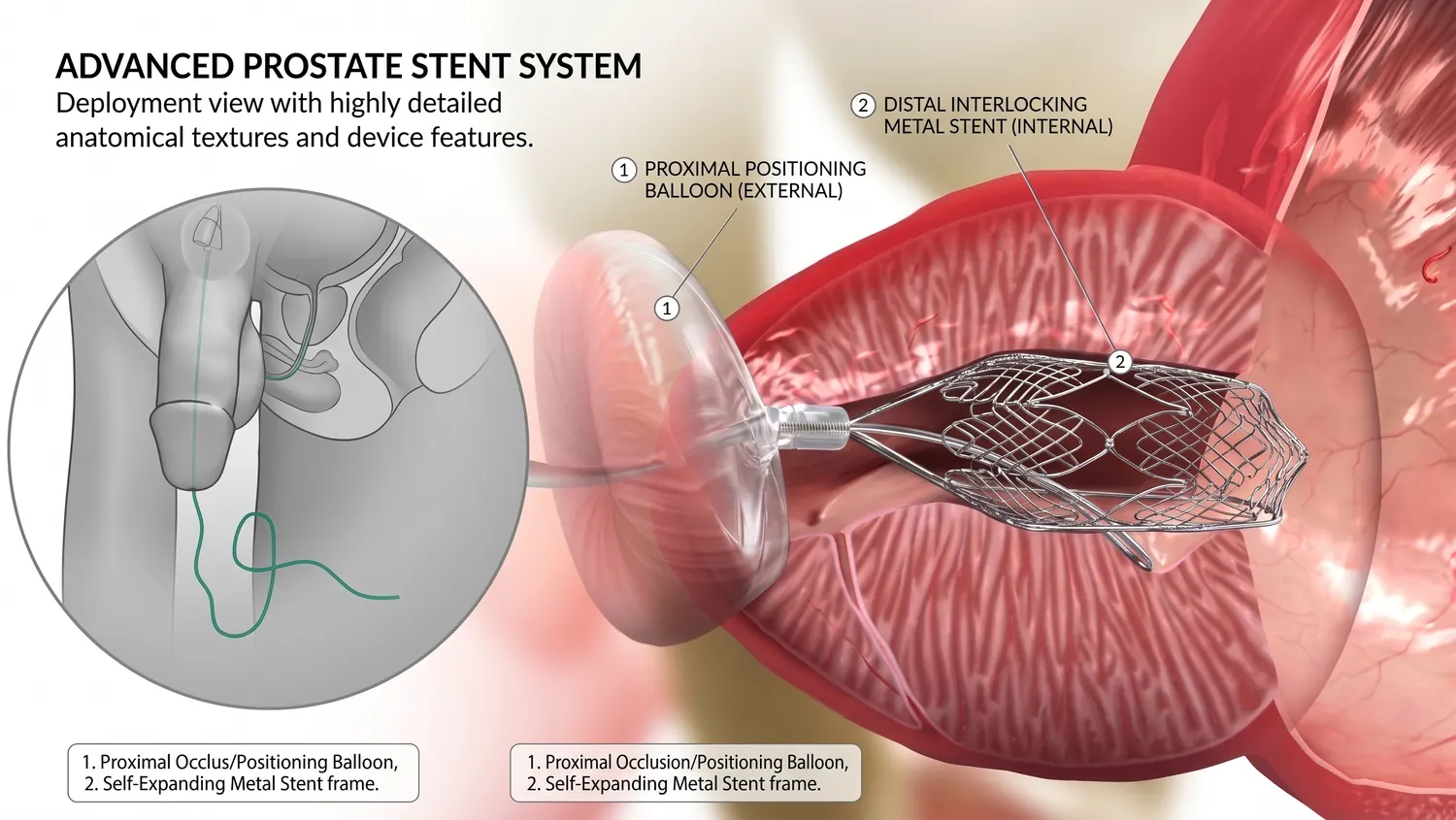
About the two illustrations on this page
Clear images of the iTind itself are not freely available, so the drawings used here are generic illustrations of transurethral nitinol devices. They show the route and the shape accurately. They get one thing wrong, and it is the thing that matters most: nothing is left inside you. The iTind is placed, left for five to seven days while it reshapes the bladder neck and prostatic urethra, and then removed at a second short visit. Any picture on this page showing a device that stays put is showing you a different treatment.
The treatment can often be performed as a day-case or outpatient procedure under local anaesthetic or light sedation. Anaesthetic practice varies between centres and patients.
How does iTind work?
The expanded device has three pressure struts. These apply sustained outward pressure at selected points within the bladder neck and prostatic urethra.
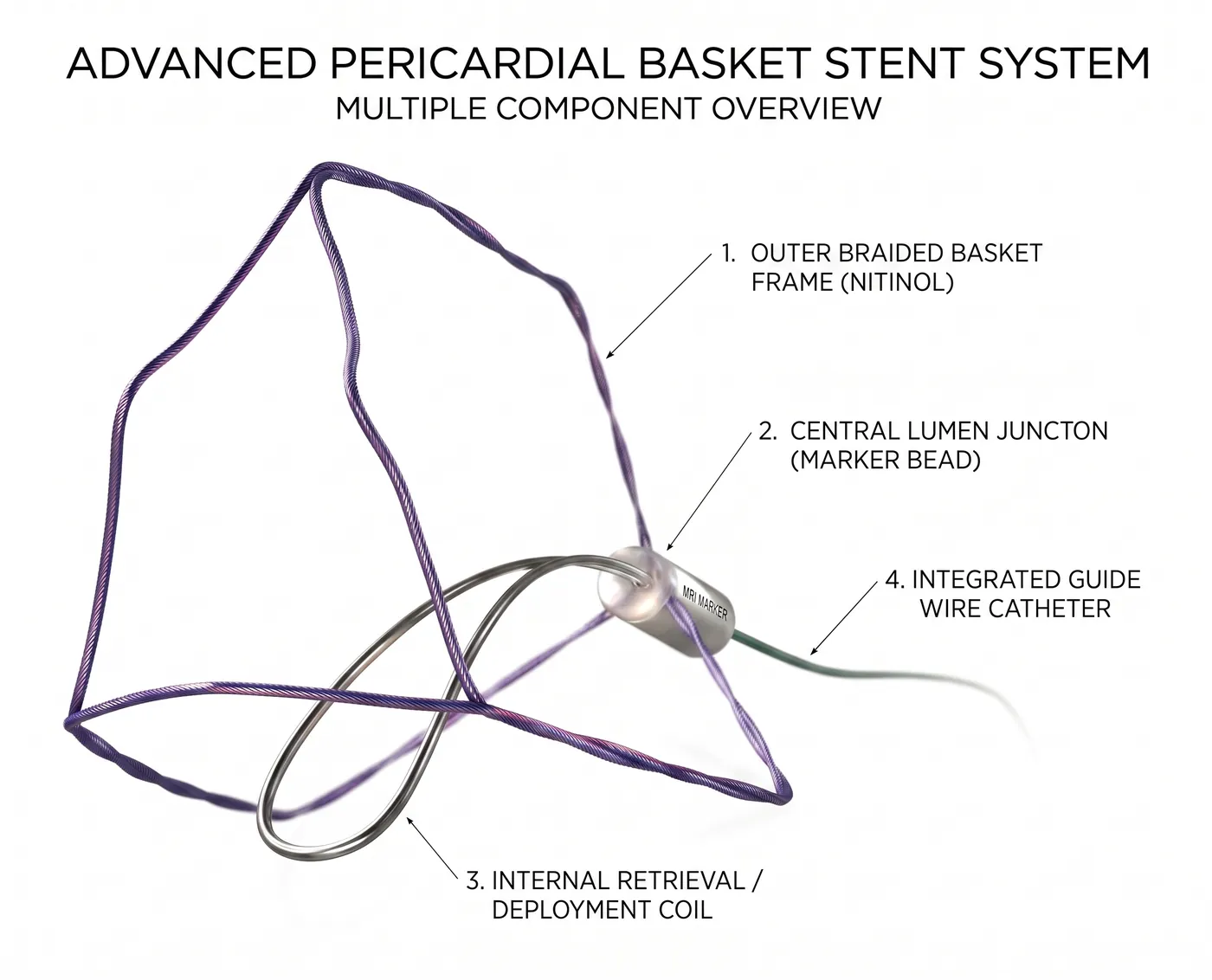
Over several days, that pressure temporarily reduces the blood supply to narrow strips of tissue. This creates controlled areas of ischaemia—reduced blood flow—followed by local tissue remodelling. When the device is removed, longitudinal channels remain within the prostatic urethra, allowing urine to pass more freely.4
The intended effect is similar in principle to making small internal incisions at the bladder outlet, but without leaving a permanent implant and without using electrical or laser energy.
iTind does not substantially reduce overall prostate volume. Its success therefore depends on whether reshaping the outlet is sufficient to relieve the particular pattern of obstruction.
Does iTind actually work?
The evidence indicates that iTind can improve urinary symptoms in appropriately selected men. However, the evidence base is much smaller than for TURP, HoLEP, Aquablation, Rezūm or UroLift.
The strongest study is a multicentre randomised controlled trial involving 175 men aged 50 or older. Participants were assigned in a 2:1 ratio to iTind or a sham procedure:
- 118 received iTind
- 57 received the sham procedure.
At three months, a reduction of at least three IPSS points occurred in:
- 78.6% after iTind
- 60% after the sham procedure.1
This difference supports a genuine treatment effect, although the relatively high response in the sham group shows that expectation, natural symptom variation and the experience of undergoing a procedure can also affect symptom scores.
The trial was unblinded after three months. At 12 months, men treated with iTind had average improvements of:
- 9.25 points in IPSS
- 1.9 points in urinary quality of life
- 3.52 mL/second in maximum urinary flow.1
These are clinically meaningful changes. They are not, however, equivalent to one year of randomised comparison because the blinded sham comparison ended at three months.
Symptom score, randomised trial
9.25IPSS points gained, 12 months
175 men, 2:1 against a sham procedure. This is the most reliable estimate of what the device itself does.
Peak urinary flow, same trial
+3.52mL/second
Real, and modest. Tissue-removing operations achieve considerably more.
Symptom score, single-arm studies
22.5→8.8of 35, at 12 months
81 men, no control group. Larger than the randomised figure — which is what usually happens when there is nothing to compare against.
The gap between those two rows Uncontrolled studies report roughly twice the benefit of the controlled one. Both are in the literature; only one of them has anything holding it honest. When a clinic quotes you a 60% improvement, this is where it comes from.
What does an IPSS improvement mean?
The International Prostate Symptom Score (IPSS) is a seven-question assessment of urinary symptoms. It asks about incomplete emptying, frequency, stopping and starting, urgency, weak stream, straining and getting up at night.
The total score ranges from 0 to 35:
- 0–7: mild symptoms
- 8–19: moderate symptoms
- 20–35: severe symptoms.
A change of around three points is usually noticeable. An average reduction of approximately nine points, as reported in the randomised iTind trial, represents a worthwhile improvement for many patients.
Prospective studies without a control group have sometimes reported larger changes.
In an 81-patient multicentre study, average IPSS fell from:
22.5 before treatment → 11.7 at one month → 8.8 at 12 months.2
This was a 60% reduction at one year. Because the study had no sham or active-treatment comparison, some of the apparent benefit may reflect patient selection, expectation or natural variation as well as the device itself.
A 2025 prospective multicentre cohort of 120 men reported a similarly substantial fall:
IPSS 21.5 → 9.7 at 12 months.5
Taken together, the research supports meaningful symptom relief, but the controlled trial provides the most reliable estimate of the treatment effect.
How much does urinary flow improve?
Maximum urinary flow, known as Qmax, improves after iTind, although the size of improvement varies between studies.
In the randomised trial, Qmax increased by an average of:
3.52 mL/second at 12 months.1
In the 81-patient single-arm study, Qmax increased from:
7.3 mL/second before treatment → 11.2 at one month → 14.7 at 12 months.2
The 2025 multicentre cohort reported:
Qmax 7.6 → 15.7 mL/second at 12 months.5
The larger improvements in the uncontrolled studies may partly reflect differences in patient selection and study methods.
Urinary flow also depends on the bladder muscle. A patient with a weak bladder may have a limited improvement in flow even if the outlet has opened successfully.
Network meta-analysis suggests that standard tissue-removing operations produce a greater average increase in flow than minimally invasive treatments such as iTind.6
How quickly does iTind work?
iTind is designed to work relatively quickly.
The device applies pressure immediately, but it remains in place for five to seven days while tissue remodelling begins. In prospective studies, improvements in IPSS and Qmax were evident by one month and continued to develop over the following months.2
In a prospective study of 70 men, patients returned to normal daily activities an average of 4.3 days after device removal.7
That figure should not be interpreted as a guaranteed recovery time. While the device is in place, patients may experience:
- pelvic or perineal discomfort
- urinary urgency and frequency
- burning when passing urine
- blood in the urine
- difficulty passing urine
- disturbed sleep
- awareness of the retrieval suture.
Symptoms usually improve after removal, but recovery differs between individuals.
Is a urinary catheter needed?
Routine catheterisation after iTind is often avoided, which is one of its practical attractions.
However, “catheter-free” should not be presented as a guarantee. Temporary urinary retention can occur, and a catheter may be required if a patient cannot pass urine adequately.
Patients with pre-existing catheter-dependent retention were generally not represented in the pivotal evidence. iTind should therefore not be assumed to have the same evidence in men already dependent on a catheter as it has in men who can still urinate independently.
How durable are the results?
The durability evidence is encouraging but needs careful interpretation.
Three-year evidence
An early prospective study followed 32 men treated with the first-generation TIND device for three years. At 36 months:
- median IPSS improved from 19 to 12
- Qmax improved from 7.6 to 10.1 mL/second
- quality-of-life scores remained better than baseline.8
This study was small, had no control group and used the earlier-generation device. Its results cannot automatically be transferred to every patient receiving the current iTind system.
Follow-up beyond four years
The second-generation multicentre study originally enrolled 81 men. Only three of the nine centres continued extended follow-up, and results beyond 48 months were available for 41 patients.
Among those followed between 50 and 79 months:
- average IPSS was 11.3
- average quality-of-life score was 2.1
- symptoms remained approximately 45% better than baseline.
Two additional patients required surgery between 36 and 48 months, and no new late complications were reported.9
These results are reassuring, but the limitations are substantial:
- only about half of the original study population contributed to the extended assessment
- follow-up came from three selected centres
- later assessments were conducted remotely
- there was no comparison group.
The study demonstrates that benefit can persist for some patients. It does not establish a precise six-year success rate for all men undergoing iTind.
What is the retreatment rate?
There is no single definitive retreatment figure.
In the 81-patient one-year prospective study:
- 2.4% restarted BPH medication
- 2.4% underwent TURP within 12 months.2
In the selected extended-follow-up cohort, two men required further surgery between 36 and 48 months. The authors described the surgical retreatment rate beyond 36 months as 4%.9
However, a broader 2025 systematic review reported an iTind surgical reintervention rate of 11.1% at four years.3
These figures differ because studies use different populations, follow-up periods and definitions. Some count only another operation; others also count restarting medication.
An additional systematic review of office-based BPH treatments estimated approximately 5% retreatment by three years for iTind, but highlighted limited long-term evidence.10
The most balanced interpretation is:
Most carefully selected patients avoid another operation during the first few years, but the true longer-term retreatment risk remains uncertain and is likely higher than the most favourable small-cohort estimates suggest.
What are the risks and complications?
In the randomised trial, adverse events were recorded in:
- 38.1% of iTind patients
- 17.5% of sham-procedure patients.1
Most were temporary Clavien–Dindo grade I or II events, meaning that they settled without an operation or were managed with simple medication or short-term intervention.
The trial reported common temporary problems including:
- pain or burning when passing urine
- blood in the urine
- urinary urgency or frequency
- pelvic discomfort
- difficulty passing urine.
In an early 32-patient study, four men experienced early complications:
- urinary retention: 3.1%
- temporary incontinence caused by device displacement: 3.1%
- urinary infection: 6.2%.8
A 2024 systematic review across minimally invasive BPH treatments estimated that 1.4% of iTind patients experienced a major perioperative complication.11
Potential risks include:
- discomfort while the device is in place
- pain during insertion or removal
- blood in the urine
- urinary infection
- temporary urinary retention and catheterisation
- urinary incontinence
- displacement or incorrect positioning of the device
- persistent symptoms
- restarting medication
- or requiring another procedure.
Published studies have not identified a major late device problem because the implant is removed after several days. That does not eliminate the possibility of scarring, ongoing symptoms or future treatment.
What do patients think afterwards?
Functional outcome scores do not always capture whether patients feel that choosing the treatment was worthwhile.
A 2026 Italian real-world multicentre study evaluated 140 men one year after iTind. Median IPSS improved from 20 to 10, Qmax from 8.5 to 13 mL/second and residual urine from 52.5 to 20 mL. Despite these average improvements:
- 68% reported low decision regret
- 32% reported high decision regret.12
Early complications and retreatment were the strongest predictors of regret.
This observational study does not prove that one-third of all iTind patients will regret treatment. Its patients were relatively young, with a median age of 52, and expectations may have influenced the result. Nevertheless, it is an important reminder that a statistically significant improvement may still feel insufficient if expectations were for a near-normal stream, no discomfort or guaranteed avoidance of further treatment.
A third of men in one real-world study reported high decision regret a year on — despite average symptom scores halving. Complications and retreatment predicted it. Expectation is part of the outcome.
What happens to erections?
The evidence is reassuring but not perfect.
The pivotal randomised trial reported no new erectile dysfunction caused by treatment during 12-month follow-up.1
The 81-patient prospective study similarly reported no new sexual dysfunction among the 61 sexually active men who completed 12-month follow-up.2
A 2026 systematic review and meta-analysis concluded that erectile function showed no significant deterioration after iTind.13
However, the number of iTind studies is small, sexual outcomes are not always the primary endpoint, and loss to follow-up can hide uncommon problems.
The fair conclusion is:
iTind appears unlikely to cause erectile dysfunction in most men, but no procedure can guarantee unchanged erections for every patient.
What happens to ejaculation?
Preservation of normal forward ejaculation is one of the principal reasons a patient might consider iTind.
No new ejaculatory dysfunction was reported in the randomised trial.1 The one-year multicentre study also reported preserved ejaculation among sexually active participants who completed follow-up.2
The device is designed to remodel the prostatic urethra without removing the bladder neck or large amounts of tissue involved in ejaculation.
Nevertheless, the sexual evidence should not be exaggerated. A 2024 systematic review found that evidence specifically addressing ejaculation after TIND or iTind remained limited compared with some other minimally invasive treatments.14
Temporary discomfort, blood in the semen or a subjective change in ejaculation may occur even when formal questionnaire scores remain stable.
Overall:
The available studies suggest a high probability of preserving ejaculation, but the true risk of uncommon or subtle changes is not known precisely.
What prostate sizes and anatomies are suitable?
The best evidence applies to a fairly selected group.
Most studies enrolled men with:
- prostates below approximately 60–75 mL
- moderate-to-severe symptoms
- reduced urinary flow
- a residual urine volume below approximately 250 mL
- no obstructing median lobe
- no previous prostate operation.2, 8
Some later studies allowed prostates up to 120 mL, but the men actually treated generally had much smaller average glands. This does not provide strong evidence for very large prostates.7
What about a median lobe?
An obstructing median lobe is prostate tissue that protrudes upwards towards or into the bladder.
Men with this anatomy were excluded from the principal iTind studies. There is therefore insufficient evidence to say that iTind is reliably effective for a significant obstructing median lobe.
What about a high bladder neck?
Because iTind acts partly at the bladder neck, selected men with a high, tight bladder outlet may benefit. However, anatomy must be assessed carefully, usually with imaging and cystoscopy. A fixed bladder-neck scar, urethral stricture or obstruction from another cause may require a different treatment.
What about urinary retention?
The pivotal evidence largely concerns men who could urinate independently. Evidence is inadequate for assuming equivalent success in men with recurrent or catheter-dependent retention, very large residual volumes or a severely weak bladder.
How does iTind compare with TURP?
TURP—transurethral resection of the prostate—removes obstructing tissue through the urethra and remains a well-established benchmark operation for moderate-sized prostates.
There is no mature, adequately powered randomised head-to-head trial showing that iTind is equivalent to TURP.
Network meta-analysis indicates that TURP generally produces greater improvement in urinary flow and objective measures of obstruction than minimally invasive treatments, including iTind.6
The practical trade-off is broadly:
iTind
- short day-case or outpatient treatment
- local anaesthetic or light sedation may be possible
- no tissue removed
- no permanent implant
- high likelihood of preserving ejaculation
- quicker initial recovery
- more modest urinary improvement
- less certain long-term durability.
TURP
- greater and faster removal of obstruction
- stronger long-term evidence
- hospital-based operation and anaesthetic
- greater bleeding and recovery burden
- much higher likelihood of dry or retrograde ejaculation.
iTind is therefore not best described as a miniature TURP. It offers a different balance between invasiveness, urinary improvement, sexual preservation and durability.
How does iTind compare with HoLEP?
HoLEP—holmium laser enucleation of the prostate—shells out most of the enlarged inner prostate.
HoLEP can treat very large prostates, usually produces a substantial increase in urinary flow and has extensive long-term durability evidence. Conventional HoLEP commonly causes loss of forward ejaculation.
iTind involves far less tissue disruption and is much more likely to preserve ejaculation, but it cannot be assumed to provide the same degree of de-obstruction or durability.
There is no robust randomised iTind-versus-HoLEP evidence. For a patient whose main priority is maximum tissue removal, treatment of a very large gland or the strongest long-term durability, HoLEP is a fundamentally different option.
How does iTind compare with Rezūm and UroLift?
Direct comparative evidence is limited, so differences should not be overstated.
iTind
- a temporary device remains for five to seven days
- creates pressure-induced channels
- uses no heat
- leaves no permanent implant
- improvement can begin within weeks.
Rezūm
- injects water vapour into the prostate
- treated tissue shrinks over weeks to months
- can treat median-lobe tissue
- catheterisation is common
- has stronger five-year prospective evidence.
UroLift
- uses permanent implants to hold the prostate lobes apart
- often produces rapid improvement
- usually preserves ejaculation
- has randomised and five-year evidence
- leaves permanent metallic implants and has a recognised retreatment risk.
Systematic reviews and network meta-analyses generally conclude that minimally invasive treatments provide meaningful symptom relief with fewer major adverse effects than conventional surgery, but comparisons between individual treatments are uncertain because direct head-to-head trials are scarce and overall certainty is often low.15
How does iTind compare with Aquablation?
Aquablation is a robotically executed, ultrasound-guided operation that removes prostate tissue with a high-pressure water jet.
It generally produces a larger improvement in urinary flow and can treat larger and more complex prostates. It is also a more substantial hospital-based operation, involving anaesthesia, tissue removal, bleeding risk and catheterisation.
iTind is less invasive and leaves no tissue cavity or permanent device, but its urinary effect is smaller and its durability evidence is much less mature.
Is iTind really minimally invasive?
Yes, in several meaningful respects:
- there is no external incision
- no prostate tissue is surgically removed
- no heat is used
- no permanent implant remains
- treatment can often be performed without general or spinal anaesthesia
- hospital admission is usually unnecessary.
However, it still involves placing a device through the urethra, leaving it inside the prostatic urethra for several days and returning for removal. Discomfort, infection, bleeding and urinary retention can occur.
It is best understood as a temporary, tissue-remodelling prostate procedure, not a treatment with no recovery or risk.
Who might be a good candidate for iTind?
iTind may be worth discussing in a man who has:
- moderate or severe urinary symptoms caused by BPH
- inadequate benefit or unwanted effects from medication
- a small or moderately enlarged prostate
- no significant obstructing median lobe
- the ability to pass urine without a permanent catheter
- a strong preference to preserve erections and forward ejaculation
- a wish to avoid tissue-removing surgery
- a preference to avoid a permanent prostate implant
- and realistic expectations about the likely degree and durability of improvement.
It may be particularly attractive to a younger, sexually active man who values ejaculation preservation and accepts that a more definitive operation could be needed later.
Who might reasonably prefer another treatment?
Another approach may be preferable when:
- the prostate is large or exceptionally large
- there is a prominent obstructing median lobe
- urinary retention is recurrent or catheter-dependent
- the residual urine volume is very high
- the bladder muscle is weak
- there are bladder stones, recurrent infection, renal impairment or another complication requiring more definitive relief
- maximum improvement in flow is the overriding priority
- the patient wants the longest-established durability
- or the patient would find several days with the device in place unacceptable.
Depending on anatomy and priorities, this may favour medication, Rezūm, UroLift, Aquablation, TURP, HoLEP or another treatment.
How strong is the evidence?
The answer differs by outcome.
Symptom improvement
One multicentre sham-controlled randomised trial demonstrates a real treatment effect, supported by prospective multicentre cohorts.1, 2 The evidence is still much smaller than for TURP, HoLEP, UroLift, Rezūm or Aquablation.
Urinary-flow improvement
Qmax improves significantly, but the average increase in the controlled trial was modest and is generally less than after tissue-removing surgery.1, 6
Recovery and short-term safety
Most adverse events are temporary and minor. Major perioperative complications appear uncommon, but the number of treated patients in high-quality studies remains limited.11
Preservation of erections and ejaculation
Trials and cohorts report stable erectile and ejaculatory function, but relatively small samples and incomplete long-term follow-up limit the ability to detect uncommon problems.13, 14
Prostates below 75 mL without a median lobe
This profile most closely matches the principal clinical studies.
Large prostates, median lobes and urinary retention
These patients were often excluded, so effectiveness cannot be assumed.
Durability beyond three years
Selected follow-up extending beyond four and even six years is encouraging, but it involves small numbers, incomplete follow-up and no control group.9
Comparison with established surgery
Most comparisons with TURP, HoLEP and other minimally invasive treatments are indirect. Properly powered randomised trials against an established reference operation remain necessary.
One finding that is not on the scale above A 2025 systematic review found industry involvement and restrictive eligibility criteria to be common across minimally invasive BPH studies — which tends to make published results look better than everyday practice. That applies to this whole field, not to iTind alone.
What do current guidelines say?
The European Association of Urology (EAU) describes iTind as a non-ablative technique under investigation. Its 2026 guidance summarises the symptom, flow and sexual-function evidence but notes that randomised comparisons with established reference treatments are still required.16
In the UK, NICE HealthTech guidance states that evidence on the safety and efficacy of prostatic urethral temporary implants remains limited in quantity and quality. NICE therefore recommends use only with special arrangements for clinical governance, consent, audit or research.17
This is more cautious than the guidance for several established BPH procedures. It does not mean that iTind has been shown not to work; it means that the evidence is not yet considered mature enough for routine unrestricted use without additional oversight and outcome monitoring.
Bottom line
iTind is an innovative, genuinely minimally invasive treatment for benign prostate enlargement. It temporarily reshapes the bladder outlet and prostatic urethra, is removed after five to seven days and leaves no permanent implant.
The strongest randomised evidence shows that it provides a real but moderate improvement over a sham procedure. At 12 months, average outcomes included:
- IPSS improvement of 9.25 points
- Qmax improvement of 3.52 mL/second
- quality-of-life improvement of 1.9 points.1
Prospective single-arm studies have reported larger improvements, including IPSS reductions of approximately 50–60% and urinary-flow rates that roughly doubled at one year.2, 5 Those studies are encouraging but more vulnerable to selection and expectation effects.
Erectile and ejaculatory function have generally been preserved. Recovery is relatively rapid, and serious complications appear uncommon. However, discomfort while the device is in place, infection, urinary retention and failure to obtain sufficient relief remain possible.
The main uncertainty is durability. Some carefully selected patients remain improved beyond four to six years, but the long-term cohorts are small and incomplete. Systematic-review estimates suggest that retreatment may be more common than the most favourable individual studies imply.
iTind may offer a reasonable balance for a man with a small or moderately enlarged prostate, no obstructing median lobe, a strong desire to preserve ejaculation and a preference to avoid both tissue removal and a permanent implant.
It is less compelling when the priority is maximum relief of obstruction, when the prostate is large or anatomically complex, or when recurrent retention and other complications call for a more definitive operation.
The most useful question is therefore not simply:
“Does iTind work?”
The evidence indicates that it can.
A better question is:
“Does its particular balance of modest urinary improvement, rapid recovery, sexual-function preservation and uncertain long-term retreatment risk match what matters most to me?”
References
Every figure on this page is traceable to one of these. Where a study is small, unrandomised or industry-sponsored, that is stated in the text rather than left in the footnote.
The 17 studies behind this page ShowHide the full list
- Chughtai B, Elterman D, Shore N, et al. The iTind temporarily implanted nitinol device for the treatment of lower urinary tract symptoms secondary to benign prostatic hyperplasia: a multicenter, randomized, controlled trial. Urology. 2021;153:270–276. doi:10.1016/j.urology.2020.12.022
- Porpiglia F, Fiori C, Amparore D, et al. Second-generation of temporary implantable nitinol device for the relief of lower urinary tract symptoms due to benign prostatic hyperplasia: results of a prospective, multicentre study at 1 year of follow-up. BJU International. 2019;123(6):1061–1069. doi:10.1111/bju.14608
- Akgul B, Tozsin A, Aydin A, et al. Reintervention rates after minimally invasive benign prostatic hyperplasia therapies: a systematic review including industry involvement. World Journal of Urology. 2025. doi:10.1007/s00345-025-05884-y
- Balakrishnan D, Jones P, Somani BK. iTIND: the second-generation temporary implantable nitinol device for minimally invasive treatment of benign prostatic hyperplasia. Therapeutic Advances in Urology. 2020;12. doi:10.1177/1756287220934355
- Dimitri M, Calarco A, Filippi B, et al. I-Tind for the treatment of lower urinary tract symptoms secondary to benign prostatic hyperplasia: mid-term outcomes from a multicenter cohort. Urologia Journal. 2025. doi:10.1177/03915603251360530
- Cornu JN, Zantek PF, Burtt G, et al. Minimally invasive treatments for benign prostatic obstruction: a systematic review and network meta-analysis. European Urology. 2023;83(6):534–547. doi:10.1016/j.eururo.2023.02.028
- de Nunzio C, Cantiello F, Fiori C, et al. Urinary and sexual function after treatment with temporary implantable nitinol device (iTind) in men with LUTS: 6-month interim results of the MT-06 study. World Journal of Urology. 2021;39:1199–1205. doi:10.1007/s00345-020-03418-2
- Porpiglia F, Fiori C, Bertolo R, et al. Three-year follow-up of temporary implantable nitinol device implantation for the treatment of benign prostatic obstruction. BJU International. 2018;122(1):106–112. doi:10.1111/bju.14141
- Amparore D, De Cillis S, Schulman C, et al. Temporary implantable nitinol device for benign prostatic hyperplasia-related lower urinary tract symptoms: over 48-month results. Minerva Urology and Nephrology. 2023. doi:10.23736/S2724-6051.23.05322-3
- Baboudjian M, Cornu JN, Gondran-Tellier B, et al. Pharmacologic and surgical retreatment after office-based treatments for benign prostatic hyperplasia: a systematic review. European Urology Focus. 2023;9(5):727–741. doi:10.1016/j.euf.2023.03.004
- Lambertini L, Sandulli A, Coco S, et al. Complication rate across the minimally invasive surgical treatments: where do we stand? A systematic review of the literature. Prostate Cancer and Prostatic Diseases. 2024. doi:10.1038/s41391-024-00900-5
- Cindolo L, Vittori G, Gallo F, et al. Patient satisfaction and decision regret in patients undergoing temporary implantable nitinol device treatment for BPH/LUTS: an Italian real-life multicenter study. Journal of Endourology. 2026. doi:10.1177/08927790261451068
- Loyola-Nieto F, Almiron da R Soares G, Lindenbaum MM, Bajic P. Sexual and urinary outcomes after iTind for benign prostatic hyperplasia: a systematic review and meta-analysis. Urology. 2026. doi:10.1016/j.urology.2026.06.006
- Gemma L, Pecoraro A, Sebastianelli A, et al. Impact of minimally invasive surgical procedures for male lower urinary tract symptoms due to benign prostatic hyperplasia on ejaculatory function: a systematic review. Prostate Cancer and Prostatic Diseases. 2024. doi:10.1038/s41391-024-00795-2
- Franco JVA, Jung JH, Imamura M, et al. Minimally invasive treatments for benign prostatic hyperplasia: a Cochrane network meta-analysis. BJU International. 2022;130(2):142–156. doi:10.1111/bju.15653
- European Association of Urology. Management of non-neurogenic male lower urinary tract symptoms: disease management. Section on non-ablative techniques under investigation. 2026 edition. Accessed 29 August 2026. EAU guideline
- National Institute for Health and Care Excellence. Prostatic urethral temporary implant insertion for lower urinary tract symptoms caused by benign prostatic hyperplasia. HealthTech guidance HTG639. Published 21 September 2022. NICE recommendations